
When to Send Condolence Flowers With Care
A loss can leave you searching for the right words, especially when you cannot be there in person. Knowing when to send condolence flowers can take one small worry off your mind. A thoughtfully chosen floral gift says, “I’m thinking of you,” without asking the grieving person to respond or find the right words themselves.
There is no single perfect moment. The kindest timing depends on your relationship with the family, the funeral arrangements, their cultural or religious customs, and whether flowers are welcome. What matters most is sending your support with care, not getting every detail exactly right.
Send condolence flowers as soon as you hear the news
In many situations, it is appropriate to send flowers shortly after learning about a death. An arrangement delivered to the family home in the first few days can bring a gentle sense of comfort during a difficult and often overwhelming time. It lets them know they are not alone as calls, arrangements, and family visits begin.
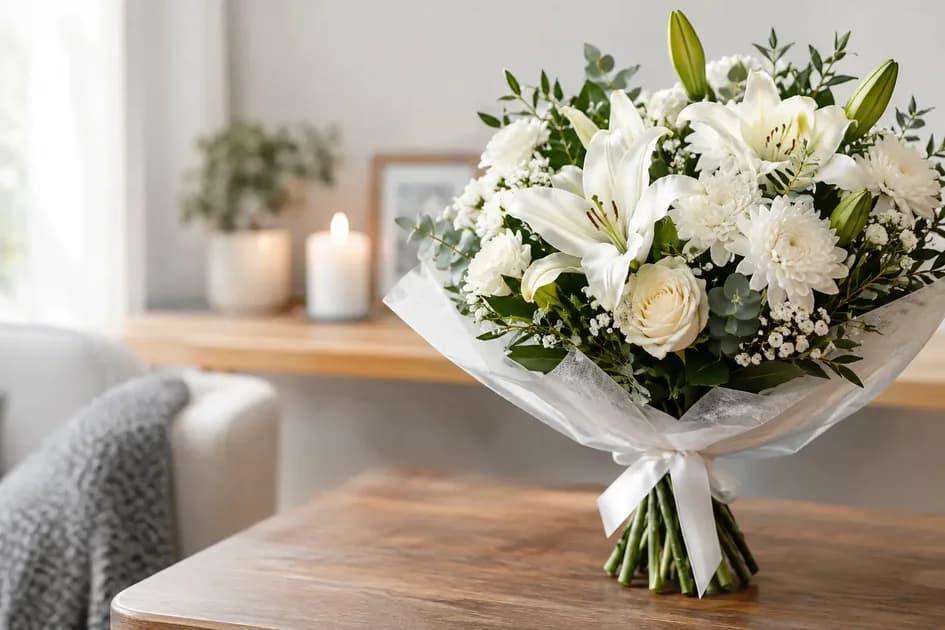
This is often the best choice if you are a close friend, relative, coworker, or neighbor and do not plan to attend the service. Choose an arrangement that feels calm and respectful rather than festive. Soft whites, creams, greens, and gentle pastels are traditional choices, although a loved one’s favorite flowers or colors can be especially meaningful when you know them well.
If you are unsure whether the family will be home, sending flowers to the funeral home or place of worship may be more practical. Check the service details first, as some venues have delivery cutoffs or may only accept arrangements from certain florists.
When to send condolence flowers for a funeral or memorial
Flowers intended for the funeral, wake, viewing, or memorial service should arrive before guests begin to gather. Ideally, arrange delivery one day before the service or early on the morning of the event. This gives the funeral director or venue staff time to receive, display, and place the arrangement properly.
Funeral flowers are generally larger and more formal than sympathy flowers sent to a home. Standing sprays, wreaths, and tribute arrangements are commonly sent by immediate family, close friends, groups, or workplaces. A smaller bouquet or basket may be more suitable if you want to express personal sympathy without creating a large display.
When ordering, include the full name of the person who has passed away, the service location, and the date and time if available. It is also helpful to add the family name to the card. These details help ensure the flowers reach the right service, particularly when a funeral home is managing several arrangements.
Sending flowers after the funeral is often deeply appreciated
Many people assume condolence flowers must arrive before the funeral. In reality, flowers sent in the days or weeks afterward can mean just as much, and sometimes more. The immediate rush of visitors, calls, and ceremonies eventually quiets down. That is often when grief feels loneliest.
A sympathy bouquet delivered to the home one or two weeks after the service is a thoughtful way to remind someone that their loss has not been forgotten. This timing is especially appropriate if you heard the news late, live far away, were unable to attend, or wanted to give the family space during the first few days.
For a close friend, you may also send flowers around a difficult date, such as the loved one’s birthday, an anniversary, a holiday, or the first month after their passing. Keep the message simple and sincere. A note such as, “Thinking of you and remembering today,” is enough.
When you should not send flowers
Flowers are widely appreciated, but they are not right in every circumstance. Before placing an order, look for any guidance shared by the family or funeral home. Some families may ask for donations to a cause instead of flowers, while certain faiths and traditions may not include floral tributes.
It may be better to choose another expression of support in these situations:
- The obituary or family specifically requests charitable donations in lieu of flowers.
- The family has shared religious or cultural preferences that discourage funeral flowers.
- The recipient has severe allergies, is in a setting where flowers are restricted, or has asked for privacy.
- You know the family would be better supported by a practical gesture, such as a meal, grocery gift, or help with daily responsibilities.
If the request says “in lieu of flowers,” follow it. You can still send a card with a personal message and make the requested donation if you are able. Respecting the family’s wishes is always the most thoughtful choice.
Where should condolence flowers be delivered?
The right delivery location usually depends on timing. Before a funeral, the funeral home, church, temple, or memorial venue is usually best. After the service, the family home is often more personal and practical.
For a coworker or business contact, sending a modest sympathy arrangement to their home is generally more considerate than sending it to the office. Grief is personal, and a workplace delivery can make someone feel put on the spot. However, a group arrangement from a team may be appropriate if the recipient is comfortable with public expressions of support.
Hospitals and care facilities may have restrictions on fresh flowers, particularly in intensive care units or certain wards. If someone is grieving while caring for a family member, confirm the delivery policy before sending anything there.
Choosing flowers that feel appropriate
You do not need to follow rigid flower rules. The gesture and card message carry more weight than a particular bloom. Still, a few choices can help you select an arrangement that feels suitable.
White lilies, roses, orchids, chrysanthemums, and carnations are frequently used in sympathy arrangements because they have a quiet, classic look. Greenery and white blooms can feel peaceful and understated. For someone with a bright, expressive personality, a warmer arrangement with their favorite colors may feel more personal than an all-white design.
Consider the recipient’s home, too. A low vase arrangement or compact basket is often easy to place on a table and does not require the family to find a large display area. A long-lasting plant may be meaningful for some households, but it also needs care. If you are unsure, fresh flowers are usually the simpler choice during an already demanding time.
At Petals & Chocs, a carefully presented floral gift and complimentary wish card can help you send your message with care when you cannot be there yourself. If the need is urgent, choose a delivery option that can reliably meet the service or home-delivery timing.
What to write on a condolence flower card
A sympathy message does not need to be long. In fact, a few genuine words are often best. Avoid trying to explain the loss, offering a silver lining, or saying you know exactly how the recipient feels. Focus on acknowledging their grief and letting them know support is available.
For a friend or family member, you might write: “With deepest sympathy. We are thinking of you and your family.” For a colleague, “Please accept our sincere condolences during this difficult time” is respectful and appropriate. If you knew the person who died, mention their name or a brief quality you will remember: “Remembering David’s kindness and keeping you close in our thoughts.”
Sign the card clearly, especially if the recipient may not recognize your name right away. If flowers are sent from a group, include the group or company name so the family knows who is thinking of them.
A thoughtful gesture does not have an expiration date
Whether flowers arrive before a service, at the family home a week later, or on a day that may be particularly hard, the message is the same: someone cares. Send them when your support can be felt most clearly, honor the family’s wishes, and let a simple, heartfelt note carry the rest.