A Thoughtful Guide to Sympathy Flower Etiquette
When someone is grieving, a floral gift can say, “I am thinking of you,” without asking the bereaved person to find the right words in return. This guide to sympathy flower etiquette makes the choices simpler, from selecting an appropriate arrangement to arranging delivery at a time that feels considerate.
Start With the Family’s Wishes
The most thoughtful sympathy gift respects the wishes of the person or family receiving it. Before ordering flowers, check whether the obituary, memorial announcement, or funeral home has shared any guidance. Some families request donations in place of flowers. Others may ask for flowers to be sent to a specific venue or invite guests to wear a particular color.
When a family has requested charitable donations, honor that request. You can still send a handwritten card, a comforting food gift, or flowers to the family home later if it feels appropriate. The point is not to make a grand gesture. It is to show care in a way that eases, rather than adds to, a difficult time.
Religious and cultural traditions matter, too. White flowers are widely associated with remembrance and peace, but customs vary. In some traditions, certain colors, flower types, or arrangements are reserved for close family members. If you are unsure, choose a simple, neutral arrangement or ask the funeral director, a close family friend, or a member of the family for guidance.
Choose the Right Type of Sympathy Flowers
A sympathy arrangement does not need to be large to be meaningful. What matters most is where it is going and your relationship with the recipient.
Flowers for a funeral service or memorial
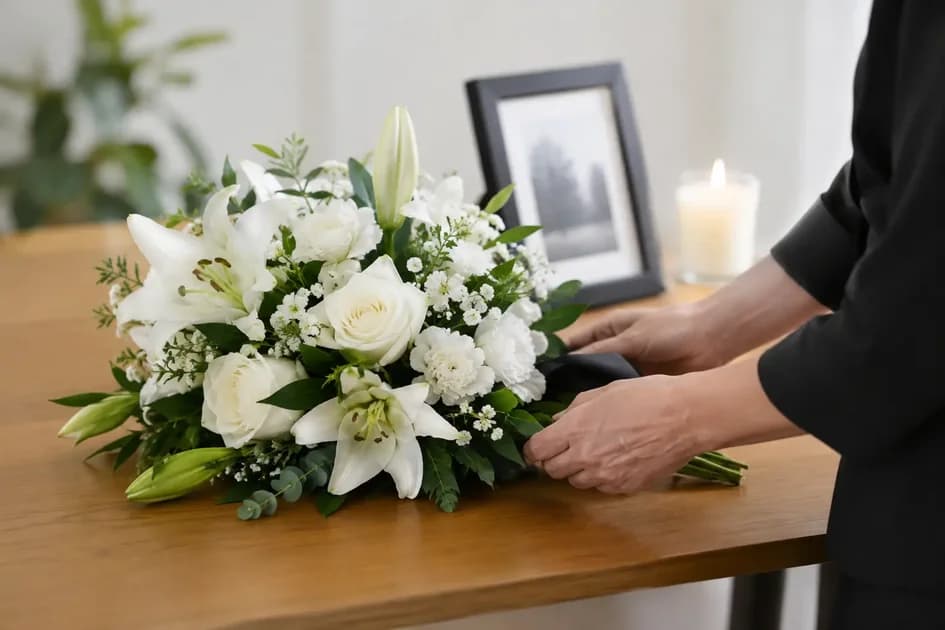
Funeral flowers are usually sent directly to the funeral home, church, memorial venue, or place of worship. Standing sprays, wreaths, and larger floral displays are traditional choices for services. These designs are visible from a distance and are often selected by immediate family, close friends, coworkers, or groups contributing together.
If you are sending flowers on behalf of an office or a larger group, a substantial arrangement can be a respectful shared gesture. Include the group name clearly on the card so the family knows who is thinking of them.
Flowers for the family home
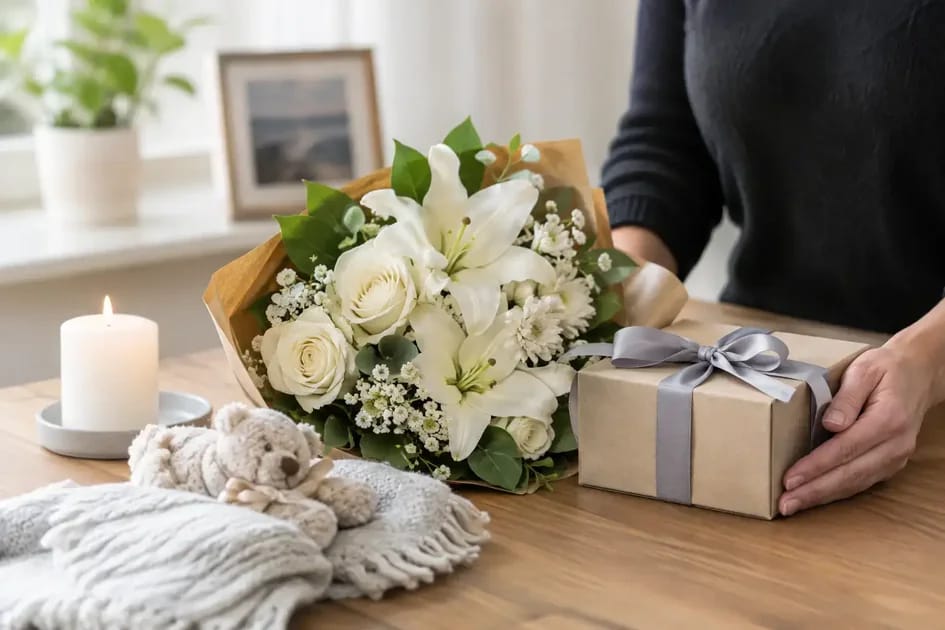
A vase arrangement, basket, or long-lasting plant is often best for a home delivery. The family can place it where they wish and enjoy it quietly after visitors have gone. Smaller, low-maintenance designs are especially considerate because the household may be managing calls, meals, guests, and arrangements.
Home flowers can be sent as soon as you hear the news, on the day of the service, or even a week or two afterward. There is no deadline on compassion. In fact, a delivery after the funeral can be deeply comforting, when much of the immediate support has faded.
Flowers for someone you know who is grieving
If the recipient has lost a parent, partner, friend, or colleague, you can send a modest arrangement directly to them. Keep it personal but gentle. A cheerful bouquet is not always wrong, especially if it reflects the recipient’s taste, but avoid something that feels overly festive or romantic unless your relationship makes that choice natural.
Color, Flower Meaning, and Personal Touches
White lilies, roses, orchids, carnations, chrysanthemums, and hydrangeas are common sympathy choices because they convey peace, remembrance, respect, and enduring love. Yet there is no single “correct” sympathy flower. A favorite bloom of the person who died can make an arrangement more personal and meaningful.
Soft whites, creams, greens, blush tones, and gentle pastels are traditional because they feel calm and understated. Purple and blue can also be appropriate for remembrance. Brighter colors may suit a celebration-of-life service or a family who has specifically asked guests to honor a loved one’s lively spirit.
It depends on the circumstances. A formal all-white arrangement may be right for a traditional service, while a garden-style design in the deceased’s favorite colors may be more fitting for an informal memorial. When in doubt, choose tasteful simplicity over an elaborate statement.
Avoid adding balloons, glitter, novelty items, or birthday-style decorations to sympathy flowers. A small keepsake, such as a photo frame or memorial item, may be suitable for a close friend or family member, but it should never distract from the sentiment of the gift.
A Guide to Sympathy Flower Etiquette for Delivery
Timing and delivery details are where a well-meant gift can become stressful if they are overlooked. If flowers are going to a service, order early enough for the florist to prepare and deliver them before the viewing, visitation, or ceremony begins. Confirm the service date, start time, venue name, and the full name of the person being honored.
When sending to a funeral home, include the family name and any available service information. Funeral homes often receive many arrangements, so clear details help staff place the flowers correctly. If the service has already happened, send flowers to the family home instead of the venue.
For home delivery, consider the recipient’s privacy. If you know they will be away for the service or receiving many visitors, choose a delivery window when someone is likely to be home, or ask whether a protected drop-off is acceptable. A reliable delivery service should be able to confirm the address, timing, and any special instructions before dispatch.
Same-day delivery can be helpful when you have just learned the news, but only if the arrangement can arrive at an appropriate time. Speed matters, yet care matters more. If the delivery cutoff has passed, sending a thoughtful arrangement the following day is still a kind and welcome gesture.
Write a Card That Feels Sincere
The card does not need to be perfect. Grief can make even simple words feel difficult, so keep your message short, warm, and honest. Avoid trying to explain a loss or telling someone how they should feel. Phrases such as “everything happens for a reason” or “they are in a better place” may be comforting to some people, but they can also feel painful or presumptive.
A few sincere lines are enough: “Thinking of you and your family during this difficult time.” “With deepest sympathy and loving memories of .” “I am so sorry for your loss. Please know I am here for you.” If you knew the person who died, share one brief, specific memory. A remembered kindness, laugh, or quality can mean a great deal to a grieving family.
Sign the card clearly with your full name, especially if you are a coworker, former classmate, neighbor, or part of a group. The family may receive many cards and will appreciate knowing exactly who reached out.
When Flowers May Not Be the Best Choice
Flowers are a caring gesture, but they are not the only one. If the family has requested donations, has allergies, is traveling, or will be away from home for an extended period, another expression of support may be more useful. A meal, grocery delivery, fruit basket, practical care package, or a simple note can be equally thoughtful.
For a close friend, practical help often carries the most weight. Offer something specific instead of saying, “Let me know if you need anything.” You might offer to bring dinner on a certain day, pick up their children, help with errands, or sit with them after visitors leave. Follow through gently, without expecting a response right away.
Let Your Gesture Be Simple and Timely
Sympathy flower etiquette is less about following a strict set of rules and more about showing respect for the family, the service, and the person being remembered. Choose an arrangement that fits the setting, confirm delivery details carefully, and write from the heart.
Even after the flowers have faded, your kindness can remain. A quiet message, a check-in a few weeks later, or a small act of practical support reminds someone who is grieving that they do not have to carry their loss alone.