
Hospital Flowers: What to Send and What to Avoid
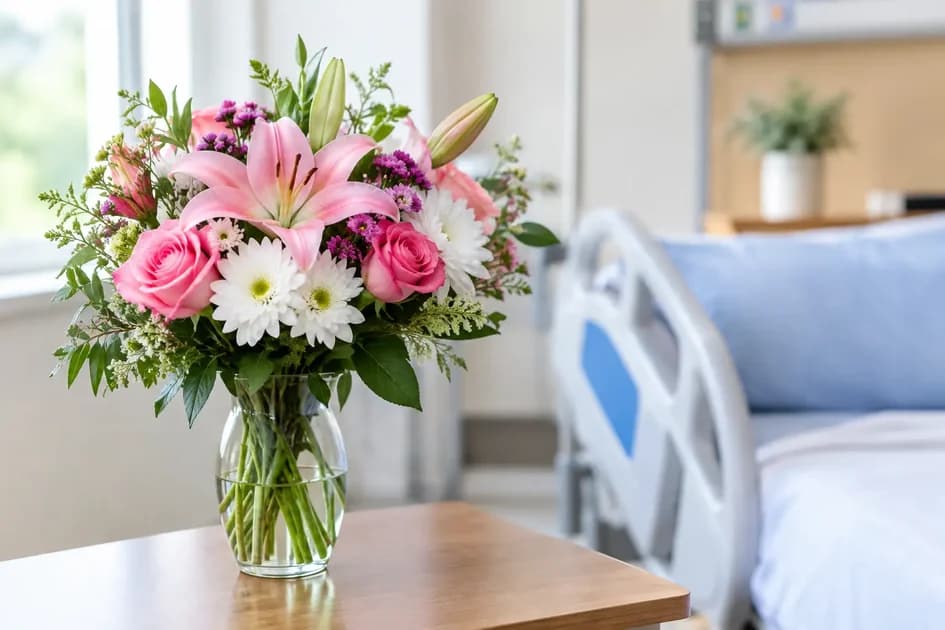
A fresh bouquet can make a hospital room feel less clinical and remind someone that they are loved beyond the walls of their ward. But hospital flowers are not always a simple send-and-forget gift. Hospital policies, allergies, infection-control rules, and the recipient’s condition can all affect what is welcome at the bedside.
The kindest approach is to choose something bright, easy to manage, and approved for the hospital. A little planning helps your gift arrive as a genuine comfort rather than one more thing the patient or nursing team needs to organize.
Can You Send Flowers to a Hospital?
Often, yes, but it depends on the hospital and the unit. Many general wards accept cut flowers, while intensive care units, transplant wards, oncology areas, neonatal units, and some maternity wards may restrict or prohibit them. These rules are usually designed to protect vulnerable patients and maintain a clean environment.
Before placing an order, call the hospital reception or the nursing station and ask whether flowers are allowed in the recipient’s room or department. It takes only a few minutes and can prevent a disappointing delivery. If flowers are not permitted, you can still send your care through a thoughtful alternative such as a get-well gift basket, a comforting blanket, a card, or a small practical gift for when they return home.
It is also worth checking whether the hospital accepts deliveries directly to patient rooms. Some facilities ask delivery drivers to leave gifts at the front desk, while others have set drop-off hours or require staff to bring items to the ward.
Choosing Hospital Flowers That Feel Thoughtful
The best hospital bouquet is cheerful without being overwhelming. A patient may be tired, sensitive to scent, or sharing a compact room, so choose blooms that bring color and warmth without taking over the space.
Choose low-fragrance blooms
Strong scents can be unpleasant for someone recovering from surgery, dealing with nausea, or receiving treatment. Lightly scented or scent-free flowers are usually a safer choice. Roses, carnations, gerbera daisies, chrysanthemums, tulips, and orchids can create a beautiful arrangement without the heavy perfume of lilies or gardenias.
Lilies are especially worth avoiding unless you know the recipient loves them and their ward permits them. Their fragrance can be very strong in a small room, and pollen can stain linens, clothing, or medical equipment. If you do choose lilies, ask for the pollen-bearing stamens to be removed.
Pick an easy-to-place arrangement
Hospital bedside tables are small and often crowded with medical items, water cups, personal belongings, and meal trays. A compact bouquet in a vase or floral container is more practical than a very large display that needs a separate surface.
A ready-to-display arrangement is particularly helpful. The recipient should not need to find a vase, trim stems, or tidy wrapping while they are resting. Choose a stable container with a modest footprint, and avoid heavy ceramic pieces if the hospital has limited space.
Let color do the cheering up
Bright, gentle colors can lift the mood without making the room feel busy. Yellow, peach, soft pink, lavender, and fresh white flowers are all reassuring choices. Sunflowers and gerbera daisies feel optimistic, while pastel roses and tulips offer a calmer, more tender message.
The right color depends on the person. A bold mixed bouquet may be perfect for a friend who loves color and laughter. For a colleague, older relative, or someone recovering from a serious procedure, a refined arrangement in soft tones can feel more appropriate.
What to Include With Hospital Flowers
Flowers are lovely on their own, but a personal message often becomes the part a patient remembers most. Keep your wish card warm, simple, and pressure-free. They do not need to feel obliged to reply while they recover.
You might write, “Thinking of you and wishing you a smooth recovery,” or “Sending a little color for your room and lots of love your way.” For someone facing a longer stay, a message such as “Take all the time you need to rest. We’re cheering you on every day” can be especially comforting.
If you want to add a gift, choose carefully. Food baskets may not suit patients with dietary restrictions, diabetes, food allergies, or treatment-related limitations. Chocolate, fruit, and snacks can be a wonderful gesture when permitted, but it is best to check with a family member first. A non-food add-on, such as a plush toy, cozy socks, a puzzle book, or a handwritten card, may be the safer option.
Avoid balloons filled with latex, as many hospitals restrict them because of allergy concerns. Mylar balloons may be allowed in some areas, but they can interfere with equipment in certain units. Again, a quick call to the ward gives you the answer.
Details That Help Hospital Flower Delivery Go Smoothly
A beautiful bouquet can still be delayed if the delivery details are incomplete. Hospitals are busy places, and patient locations can change quickly. Include the recipient’s full name exactly as it appears in hospital records, the hospital name, the ward or room number if available, and a contact number for the recipient or a close family member.
If you do not know the room number, do not guess. Provide the admission details you have and let the hospital guide the delivery process. Some hospitals will not confirm patient information over the phone for privacy reasons, but they can usually explain their flower-delivery procedure.
Timing matters too. Try to send during standard visiting or delivery hours, rather than late in the evening. Same-day flower delivery can be a thoughtful solution when someone has been admitted unexpectedly, but order early when possible. It gives the florist time to prepare the arrangement and coordinate with hospital access requirements.
For a surgery or procedure, consider sending flowers after the patient is settled into recovery or after they have returned home. Before surgery, the recipient may be fasting, anxious, or moved between departments. A delivery one or two days later can feel better timed and gives them something lovely to enjoy when they have more energy.
When Flowers Are Not the Right Choice
There are moments when the most thoughtful gift is not a bouquet. If the recipient is in an ICU, isolation area, transplant unit, or another restricted ward, respect the rule without hesitation. Their care team is focused on safety, and your support can take another form.
A carefully chosen get-well hamper for the family at home can be meaningful, especially if loved ones are spending long hours at the hospital. So can a practical care package waiting for the patient after discharge. Consider herbal tea only if it suits their medical guidance, along with comforting snacks for family members, a soft throw, a notebook, or a cheerful card.
For a coworker or client, sending a shared card from the team may be more suitable than a large arrangement. It keeps the gesture personal while avoiding questions about ward rules, allergies, or storage space.
A Few Hospital Flower Etiquette Tips
Keep the gesture centered on comfort. Do not choose an arrangement so large that the recipient feels responsible for displaying it, transporting it, or taking care of it. Fresh flowers should feel like a small lift in the day, not a task.
Be mindful of the relationship as well. Romantic red roses can be perfect for a partner, while a colorful seasonal bouquet usually suits a friend, colleague, teacher, or neighbor. For a new parent, check the maternity ward policy first and consider a cheerful arrangement for the family to enjoy at home if flowers are restricted.
Most of all, do not wait for the perfect words. A simple bouquet and a sincere note can tell someone they are missed, supported, and remembered. When hospital flowers are chosen with care and sent at the right time, they bring a welcome piece of home to a place where comfort matters most.